Vendor Risk Management: Your Weakest Link Is Not Internal
Vendor risk management is how businesses protect themselves from third-party breaches. Learn what a practical VRM program looks like and the four questions to ask every vendor.
 By
Jason Lee
17 min read
By
Jason Lee
17 min read
Vendor risk management means evaluating, monitoring, and controlling the cybersecurity practices of every third party your business connects to. Because third-party breaches now account for more than 30% of all incidents, the vendors you trust with your data and systems are often a greater liability than anything happening inside your own walls.
The Vendor in Your Network Already Has a Key
Think about how many tools your business runs on. Payroll software. A cloud backup service. Your IT ticketing system. A point-of-sale platform. A marketing automation tool. Each of those vendors has some level of access to your environment, your data, or both.
Now think about this: you probably cannot name all of them off the top of your head.
That is not unusual. Most growing businesses accumulate vendors the way they accumulate software subscriptions -- one at a time, often at the point of need, without a formal vetting process. The problem is that every vendor connection is a door. And when a vendor gets breached, that door opens from the outside. (For more on how attackers exploit these relationships, see our post on The Growing Third-Party Security Threat.)
The Numbers Are Hard to Ignore
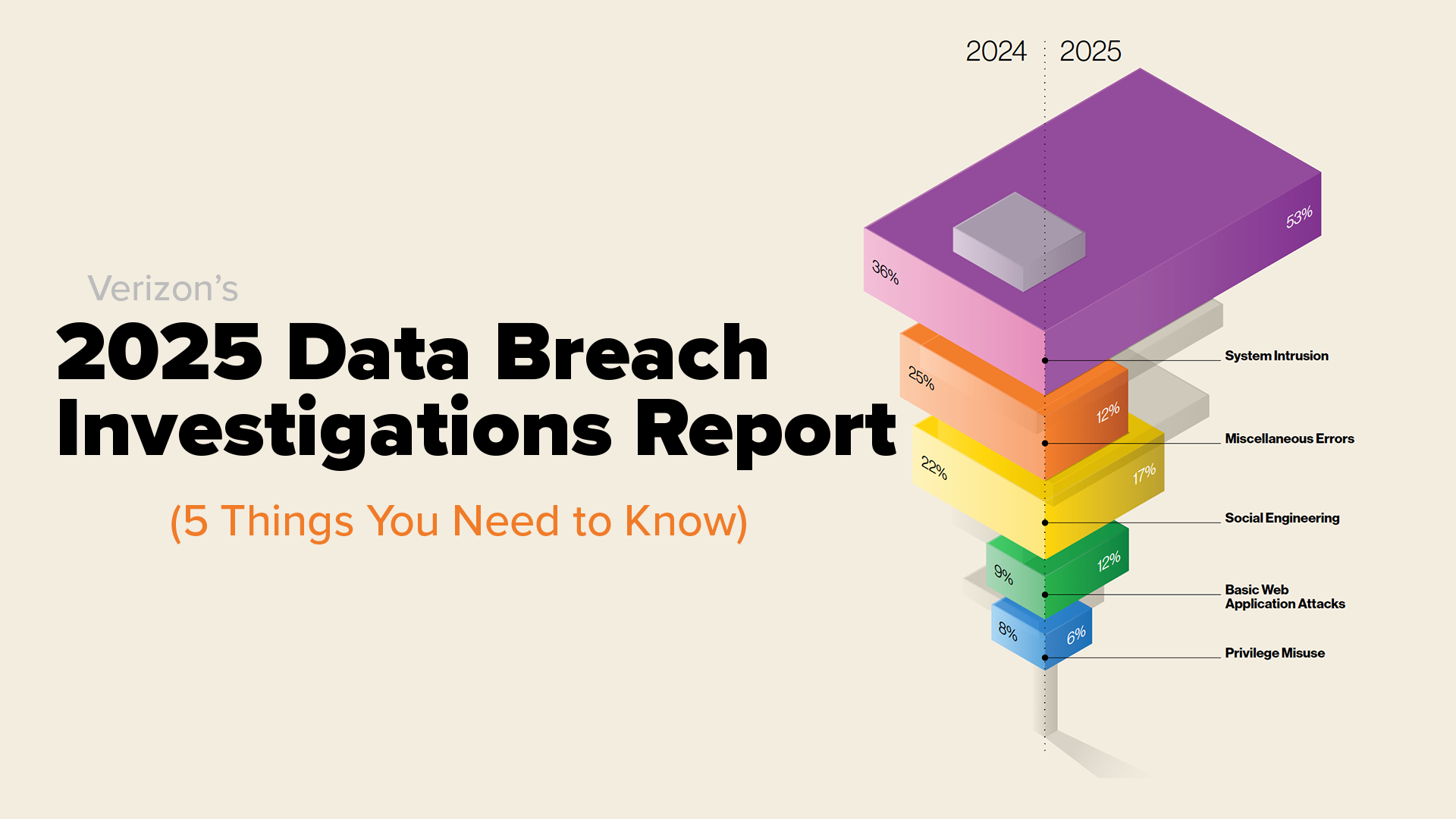
The 2025 Verizon Data Breach Investigations Report found that third-party involvement in confirmed breaches doubled in a single year, rising from 15% to 30%.1 That is not a trend -- that is a sea change. And if you missed our breakdown of that report, you can catch up in our post 5 Key Takeaways from the 2025 Verizon Data Breach Report.
According to SecurityScorecard's 2025 Global Third-Party Breach Report, 35.5% of all breaches are directly linked to third-party access.2 And 98% of organizations currently have a business relationship with at least one vendor that has already experienced a breach.3
If that last statistic landed a little funny, here is why it should: your business is almost certainly connected to a vendor that attackers have already successfully targeted. Whether that exposure reaches you depends on how well that vendor manages its own security -- and whether you have taken the time to ask.
When a third-party breach does reach your business, the cost is not just elevated. The average cost of a third-party data breach runs approximately $4.91 million -- roughly 40% higher than breaches originating internally.4 That gap reflects the complexity of attribution, remediation, and the notification obligations that follow.
What Vendor Risk Management Actually Looks Like
Vendor risk management (VRM) is the process of identifying, evaluating, and continuously monitoring the security posture of every third party that touches your business. The goal is not to avoid using vendors. That is not realistic. The goal is to understand the exposure each one introduces and take proportionate steps to manage it.
A practical VRM program covers four areas:
Identification. Know who has access to your environment, your data, or your systems. This includes software vendors, managed service providers, cloud platforms, and any partner with physical or digital connectivity to your network.
Assessment. Before connecting a new vendor -- and on a regular cadence for existing ones -- evaluate their security controls. Do they have SOC 2 certification? A documented incident response plan? Do they enforce multi-factor authentication (MFA) for their own employees?
Contractual protections. Every vendor agreement should include language that defines data handling expectations, breach notification timelines, and liability allocation. If a vendor will not sign on those terms, that tells you something.
Ongoing monitoring. Vendor security postures change. A company that was well-secured last year may have gone through an acquisition, experienced staff turnover, or delayed a critical patch. Reviewing vendor risk is not a one-time checkbox.
Four Questions to Ask Every Vendor
You do not need a legal team or a dedicated risk officer to start asking better questions. These four will cover the most critical ground:
- Do you have a current SOC 2 Type II (or applicable compliance) report? This attestation tells you that an independent auditor has verified the vendor's security controls -- not just that they say they have them.
- What is your breach notification policy? If a vendor experiences an incident that exposes your data, how quickly will they tell you? 48 hours? 30 days? The answer matters for your own compliance obligations.
- Who from your organization has access to our data or systems, and how is that access managed? Privileged access with proper controls is acceptable. Broad, unmonitored access is not.
- What is your patch management process? Many of the largest third-party breaches of recent years came down to unpatched vulnerabilities in widely used tools. Find out how quickly critical updates get applied.
These questions do not require a formal audit. But asking them signals that your business takes security seriously -- and that tends to surface problems before they become incidents. For more on the security blind spots business leaders commonly miss, see Cybersecurity Confessions: What Business Leaders Get Wrong.
Tier Your Vendors by Risk
Not every vendor carries equal exposure. A company that hosts your backups introduces more inherent risk than the one that delivers your office supplies. Tiering your vendors helps you apply the right level of scrutiny without burning out your team.
A simple three-tier model:
Tier 1 (High Risk): Vendors with access to sensitive data, financial systems, or direct network connectivity. These receive full assessment, contractual review, and annual reassessment.
Tier 2 (Moderate Risk): Vendors with limited data access or no direct system access. A lighter-touch questionnaire and review every two years is appropriate.
Tier 3 (Low Risk): Vendors with no access to your environment or data. Document them and monitor for relationship changes.
Most small and mid-market businesses have fewer Tier 1 vendors than they expect -- often five to ten. That is a manageable number.
Where to Start If You Have No Program Yet
If vendor risk management sounds like a large undertaking, start small. Build a vendor inventory first. Simply listing who has access to what -- and what data is involved -- will reveal the areas of immediate concern that a formal program can address over time.
At Sentry Technology Solutions, vendor risk management is a core component of the Secure stage in our Technology Maturity Model. It is the work that protects your business not just from threats inside your walls, but from the exposures that walk in through trusted relationships. For context on the financial exposure a breach creates, see our post on Cyber Insurance: What It Covers (and What It Does Not).
If you have been operating without a clear picture of your vendor exposure, that is not unusual. But it is fixable. Contact the Sentry team to get a vendor risk assessment and start building the controls that keep your trusted relationships from becoming your biggest liability.
Frequently Asked Questions
What is vendor risk management?
Vendor risk management (VRM) is the process of identifying, evaluating, and monitoring the security and operational risks introduced by third-party vendors who have access to your business data, systems, or network.
Why is third-party risk growing?
Attackers follow the path of least resistance. As businesses have added more cloud software and connected services, vendors have become attractive targets because a single successful breach can provide access to dozens -- or hundreds -- of their customers simultaneously.
How many vendors does the average small business have?
More than most owners expect. When a full inventory is completed, many small and mid-market businesses discover 20 to 40 active vendors with some level of system or data access.
Does vendor risk management require a dedicated team?
Not necessarily. A managed IT partner can own much of the vendor risk management process on your behalf -- handling assessments, tracking certifications, and monitoring for vendor-side incidents.
How is vendor risk management different from cyber insurance?
Cyber insurance transfers financial risk after a breach occurs. Vendor risk management reduces the likelihood of a breach in the first place. They are complementary -- not substitutes for each other.
References
- Verizon 2025 Data Breach Investigations Report. verizon.com/business/resources/reports/dbir
- SecurityScorecard 2025 Global Third-Party Breach Report. securityscorecard.com
- SecurityScorecard 2025 Global Third-Party Breach Report (ibid).
- Secureframe: 100+ Essential Third-Party Risk Statistics and Trends [2026 Update]. secureframe.com/blog/third-party-risk-statistics